
How to Find Recently Released Chester County Inmates
There is no single button to press. Chester County does not publish a public, real-time roster of released inmates in its official pages, and there is no "who got out today" feed. So you work from clues. The fastest first step is the phone. Staff at the jail can confirm whether someone is still held or has left. After that, court dockets fill in the timeline, and free alert tools watch for the next change. Most people use two or three of these methods together rather than relying on just one.
Court dockets are the quiet workhorse here. The free Pennsylvania Judiciary Web Portal shows docket sheets that often carry release clues. You may see that bail was posted, that a sentence was handed down, that release conditions were set, or that a bench warrant was withdrawn. None of these say "released" in plain words. But read together, they tell you a lot about whether a person is likely still in custody. A docket is a case record, not a jail log, so treat it as a strong hint rather than proof.
Keep the search practical. Have a full name and, if you can, a date of birth or a docket number before you start. Names repeat, and a birth date sorts out the matches. Knowing who held the person matters too. The county jail, a state prison, and a federal facility each report through a different system, and only one of them will have your answer.
Note: a posted bail entry or a sentencing date on a docket suggests a custody change but never replaces a direct confirmation from the holding facility.
Setting Up Release Alerts for Chester County Inmates
The best tool for "tell me when they get out" is Pennsylvania's victim notification service, PA SAVIN, reached through VINELink. It is free. You register once for a person, then the system contacts you when their custody status changes. You can use it online, by phone at 866-972-7284, or through the mobile app. Notifications can cover county jail custody changes, and state prison or parole notices may also involve the Office of the Victim Advocate. This is the closest thing to an automatic released-inmate signal that the public can use for Chester County.
Registration is short. You search for the person, pick the right match, then choose how you want to hear from the system. The steps below follow Pennsylvania's official instructions.
- Open VINELink and choose Pennsylvania as the location.
- Select the option for an offender located in Pennsylvania, then enter the first and last name and click Search.
- Click Get Notified on the correct person, add your phone or email, and confirm.
The VINELink portal is shown here, where the search and the Get Notified registration both begin. The site walks you through the same prompts whether you use the web or the app. Once you register, you do not have to keep checking, since the alert comes to you. Below is a look at the notification portal you start from.
Pennsylvania's official VINELink page is where each release alert is created and managed.
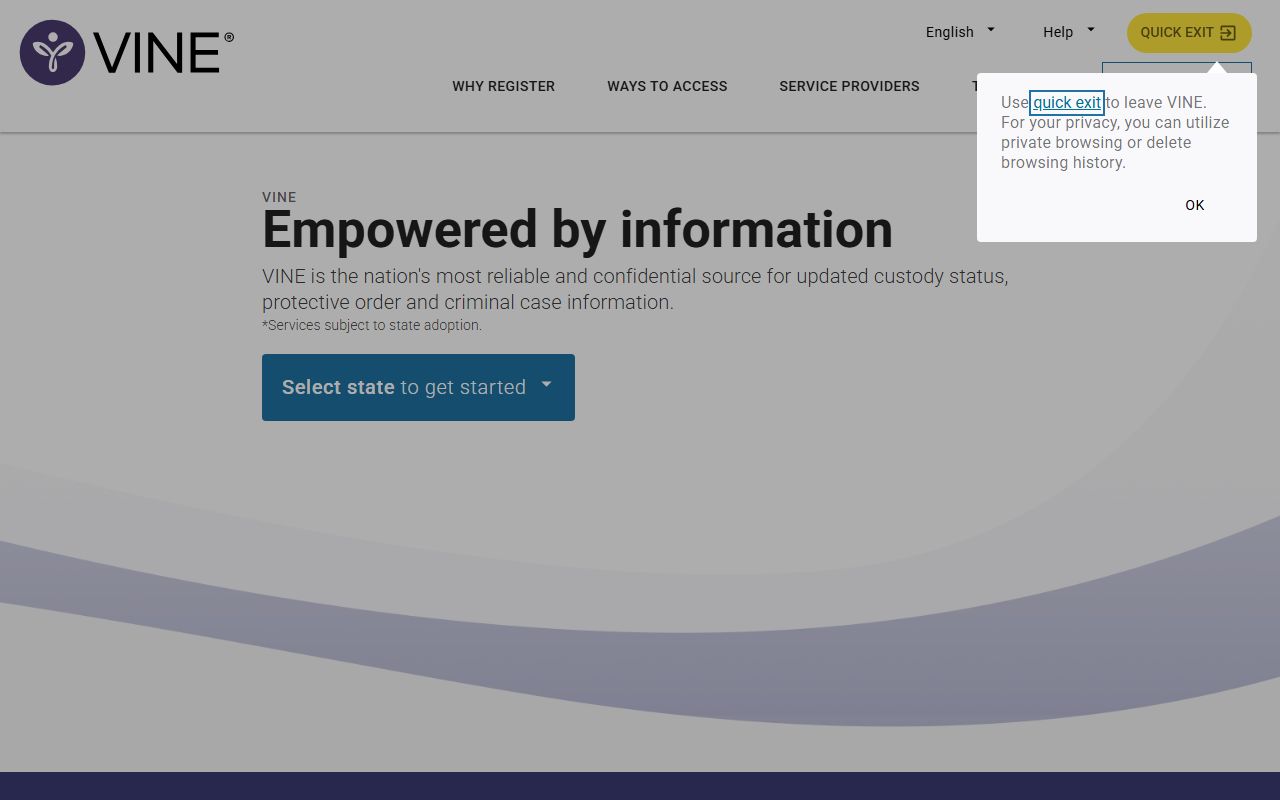
That portal lets you add phone, text, or email methods so the alert reaches you the way you prefer.
Pennsylvania also posts step-by-step SAVIN registration instructions for people who want release and custody alerts.
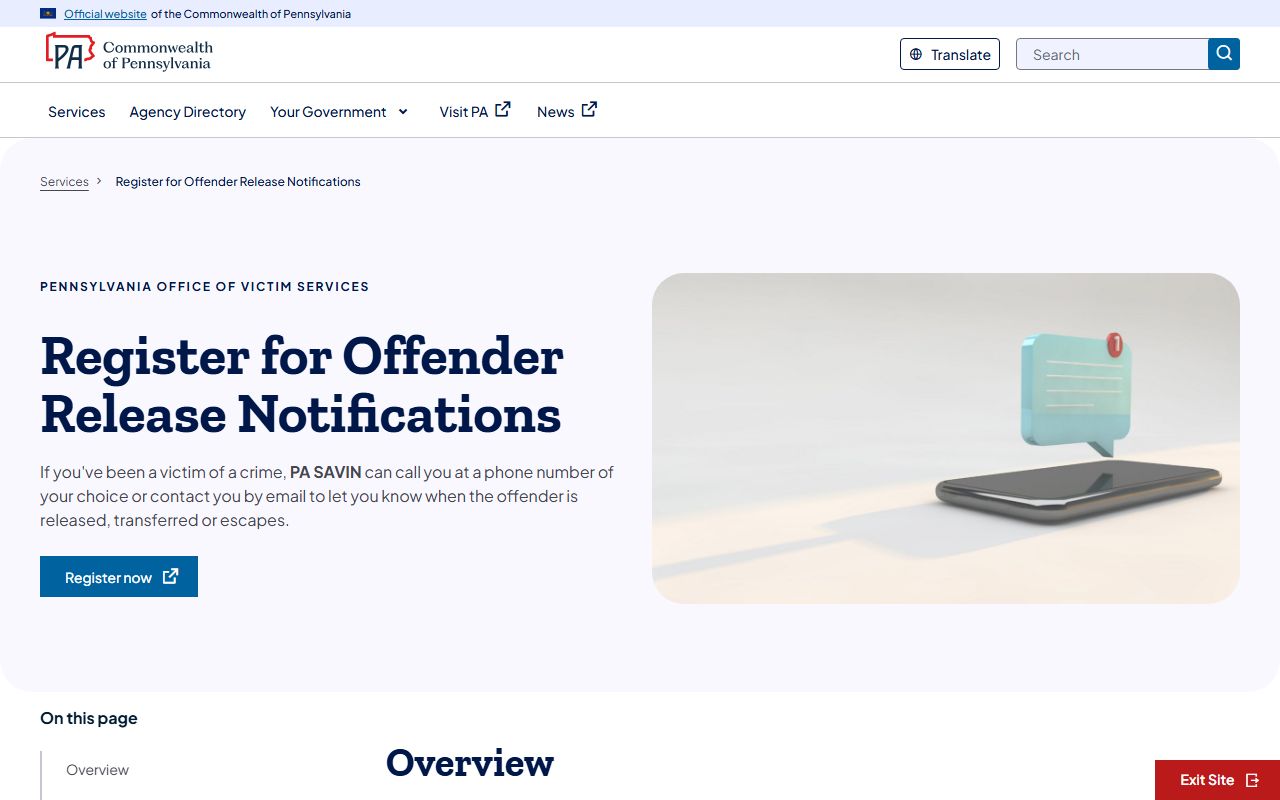
Those instructions walk you through choosing Pennsylvania, entering a name, and setting the contact method for each alert.
Searching State and Federal Released Inmates
When a person was sentenced to state prison rather than held in the county jail, you switch to the Pennsylvania Department of Corrections locator. The state explains how the tool works on its locate an inmate page, and the search itself runs at the PADOC inmate locator. This database is updated daily. It covers state-sentenced inmates and parolees only. It does not show county jail inmates, and it leaves out people held in another state. So a Chester County resident who served county time will not appear here, while one who went to a state prison will.
The official PADOC information page describes who shows up in the locator and how the daily update works.
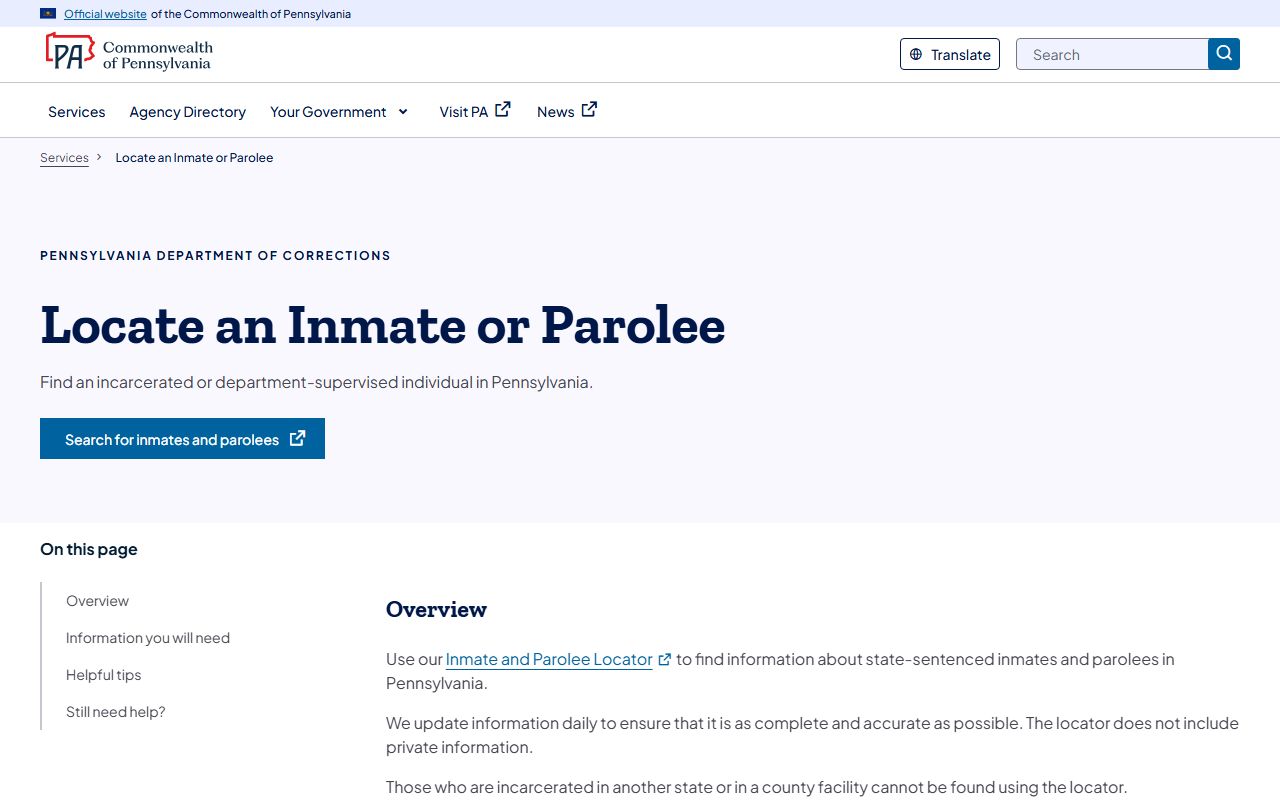
That guidance also flags that some personal details in the system are self-reported and not independently verified.
Searching is simple. You can use just a last name or an inmate number. For common last names, adding a first name helps cut the list down. The state suggests turning off pop-up blockers and trying a different browser if the page acts up. The field table below shows what the locator asks for.
| Field Label | Type | Required | Notes |
|---|---|---|---|
| Inmate / Parole Number | Text | Alternative | Best exact search when you have it |
| Last Name | Text | Alternative | Minimum needed for a name search |
| First Name | Text | No | Helps when the last name is common |
| Search | Button | n/a | Runs the locator |
The PADOC locator search screen is shown next, with its name and number fields. A result page returns a set of details rather than a single yes or no on release. The sample field inventory that follows lists what a PADOC record typically holds.
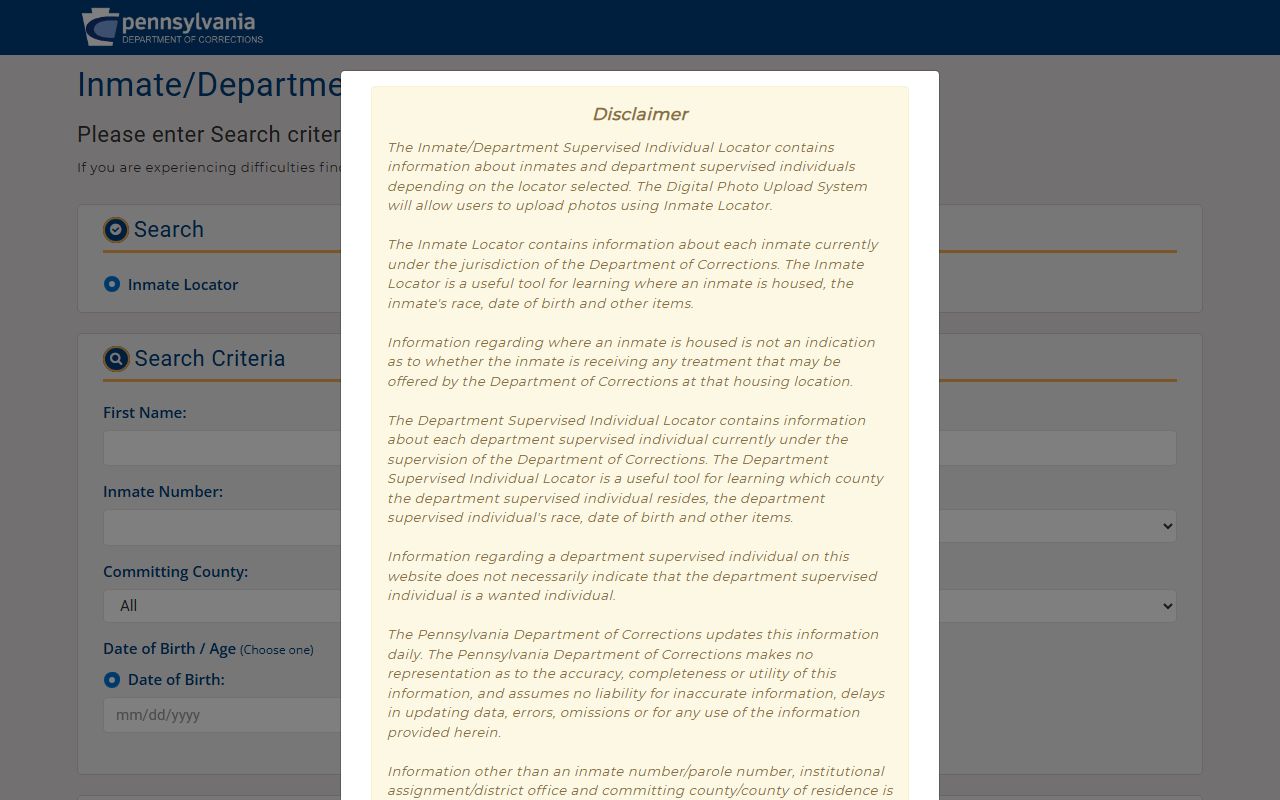
From that record you can read the location, the committing county, and the supervision status.
- Name as recorded by the department.
- Inmate or parole number used as the permanent ID.
- Current location, shown as an institutional assignment or a district office.
- Committing county or county of residence, such as Chester.
- Parole or supervision status where it applies.
- Demographic details that may be self-reported and not independently verified.
For people held in federal custody, the answer lives in a separate system run by the Bureau of Prisons. The BOP inmate locator covers federal inmates from 1982 to the present. It can return a status of "Released" or "Not in BOP Custody" with no facility listed, which means the person has left federal custody. They may still be in another system or on supervision, though. BOP also warns that release dates can change because of sentence recalculation, including First Step Act credits. So a date you see today is an estimate, not a promise.
The federal BOP locator home page is shown here, where you choose a number search or a name search.
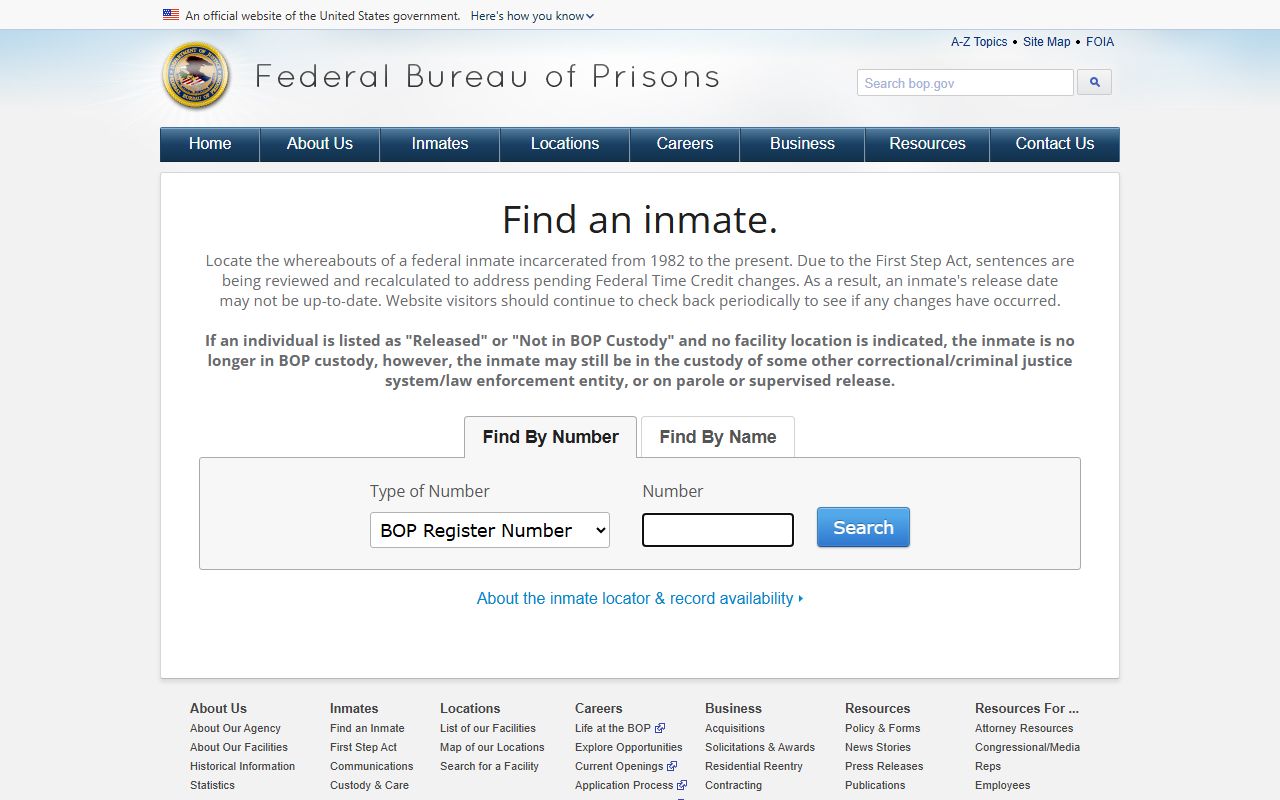
The locator gives two ways in, and the field table below breaks down both tabs.
| Field Label | Type | Required | Notes |
|---|---|---|---|
| Find By Number | Tab | No | BOP Register, DCDC, FBI, or INS number |
| Number | Text | Conditional | Exact identifier for the number search |
| Find By Name | Tab | No | Search by first, middle, and last name |
| First Name | Text | Conditional | Used in the name search |
| Middle Name | Text | No | Narrows a name search |
| Last Name | Text | Conditional | Required for a name search |
| Race | Dropdown | No | BOP race category |
| Age | Numeric | No | Narrows the results |
| Sex | Dropdown | No | Male or female options |
Verifying Release in Person or by Phone
Tools give you clues. A phone call gives you a straight answer for county custody. Chester County Prison can be reached at 610-344-5040, and the Correctional Center at 610-344-4222. When you call, have the person's full name ready, and a date of birth or case number if you have one. Staff can tell you whether the person is still held or has left. This is the most direct way to confirm a release for someone who was in the county jail, since the county does not run a public roster for the public to read.
Pair the call with the docket. If a docket shows bail posted, a time-served sentence, or charges withdrawn, that lines up with a release and helps you ask the right question on the phone. For a state-sentenced person, the PADOC locator confirms the current institution or that the person sits under district office supervision. For federal cases, the BOP status field tells you whether the person remains in custody. Use the source that matches the facility, then confirm with a call when custody is unclear.
Note: classification of a newly booked person can take 48 to 72 hours, so very recent custody changes may not be settled when you first call.
The Sex Offender Registry for Released Chester County Offenders
Some released people must register under Pennsylvania's Megan's Law. The public registry runs at the Pennsylvania State Police Megan's Law site. It is a registration database, not a general release log, so it only lists people who carry a registration duty. Still, it is a useful check after release because it shows where a registrant lives and whether they are in compliance. You can search Chester County directly, or narrow further by municipality, city, or ZIP.
The registry offers several search tabs, and you pick the one that fits what you know. The field table below lays out the options.
| Field Label | Type | Required | Notes |
|---|---|---|---|
| County | Tab / Dropdown | No | Select Chester for a county search |
| Municipality | Tab / Dropdown | No | Municipality-specific search |
| City | Tab / Text | No | Search by city name |
| Zip Code | Tab / Text | No | Search by ZIP |
| Mile Radius | Tab / Text | No | Search around an address or ZIP |
| Name | Tab / Text | No | Search by offender name |
| Non-Compliant | Tab | No | Filters registrants out of compliance |
| SVP / SVDC | Tab | No | Sexually violent predator or delinquent child |
| Transient | Tab | No | Registrants with no fixed address |
A registry profile holds more than a name. The fields below show what a typical Megan's Law record displays once you open it.
- Name and aliases tied to the registrant.
- Photograph of the person.
- Status and compliance category.
- Address or transient status with county, municipality, and ZIP.
- Offense and conviction or adjudication details.
- Tier, SVP, or SVDC classification where it applies.
- Physical descriptors, plus vehicle, employer, or school data when required and public.
Parole and Probation After Release in Chester County
Many released people are not fully free. They serve the back end of a sentence under supervision. State parole sits with the Pennsylvania Parole Board, and the PADOC locator shows the district office that supervises a parolee instead of a prison name. County-level probation is handled locally and tied to the case docket. So a person can be out of a cell yet still report to a supervising officer, follow conditions, and risk return for a violation.
Supervision shapes how you read a release. If the PADOC record lists a district office rather than an institution, the person is on parole in the community. Dockets may also note probation terms set at sentencing. To report a concern about a supervised person, the supervising office or the parole board is the right contact. The county does not field those reports through a public web form, so a direct call to the supervising body works best.
Pennsylvania Parole Board
Supervision and parole status
Harrisburg, PA
See PADOC locator for district office
Reentry Resources in Chester County
Release is a starting line as much as a finish line. Chester County Prison states that its mission includes reentry services and recidivism risk reduction, so support begins before the gate. After release, several county and regional groups help with the basics. Housing, jobs, treatment, and legal questions all have a place to turn. People do better when they line up help early rather than wait for a crisis, and a steady plan lowers the odds of going back.
The groups below are common starting points for released Chester County residents. Check current eligibility with each one before you count on a service, since programs change.
- Chester County Drug and Alcohol Services for treatment referrals and recovery support.
- Chester County Public Defender for help on open or post-release legal matters.
- Legal Aid of Southeastern Pennsylvania for civil legal needs like housing and benefits.
- Chester County Bar Association at 610-692-1889 for attorney referrals.
- PA CareerLink Chester County for job search and training.
Note: program eligibility and intake rules shift often, so confirm details with each office before you rely on a service.
Civil Rights and Voting After Release
Release brings some rights back. In Pennsylvania, a person serving a felony sentence behind bars cannot vote while confined. The moment they are released, voting rights are restored. There is no extra waiting period tied to parole or probation for the vote itself. Pretrial detainees, who are held but not convicted, generally keep the right to vote, as do people held on a misdemeanor. So a stay in jail does not always strip the ballot.
Rights beyond voting depend on the case. Firearm rights, certain jobs, and some licenses can stay limited after release, especially for serious convictions. The exact rules turn on the offense and the sentence, and they are not uniform. For a clear answer on a specific record, a person should check with an attorney or the relevant state office rather than assume. The county Bar Association referral line is one way to find counsel, and the Public Defender can help on matters tied to an open case.
Voting questions go to the state. The Pennsylvania Department of State publishes the current wording on who can register and vote after release, which is the safest source for exact rules.